Financial Operations
Capitalization Table Software: A Founder's Guide
Ditch the spreadsheet. Learn how capitalization table software provides a single source of truth for equity, simplifies fundraising, and ensures compliance.
ByJumpstart Partners, CPA, QuickBooks ProAdvisor
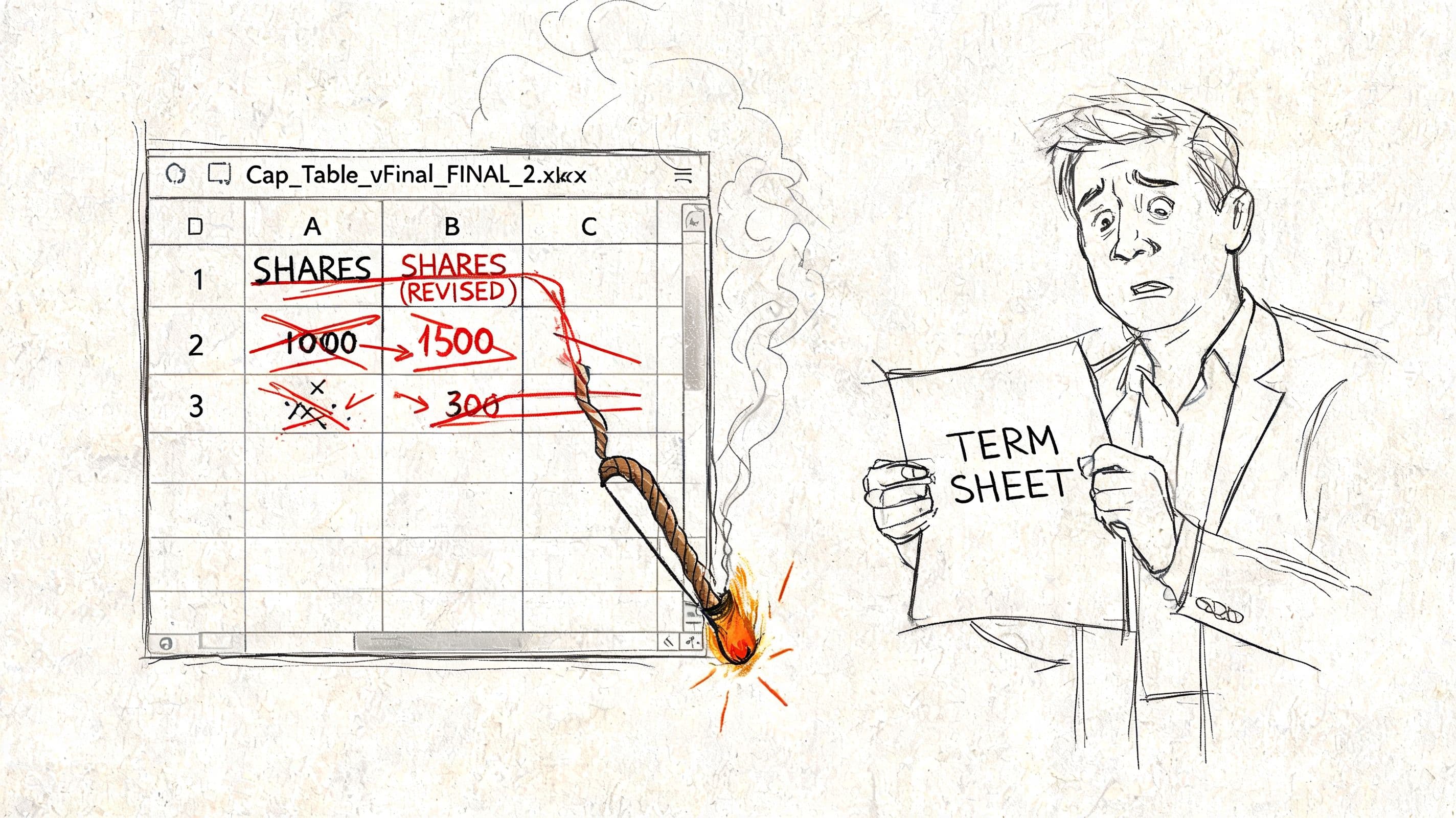
··15 min readYour investor asks for the cap table. Your controller opens the spreadsheet. The file name ends in something like “final_v3_revised_USETHISONE.” Nobody is fully sure it is the accurate version.
That's not a software problem. That's a governance problem.
If you run a growing SaaS company, agency, or services business, your cap table sits in the middle of fundraising, equity grants, board approvals, tax work, and diligence. When you manage it in Excel, every new grant, transfer, exercise, or note conversion creates another chance to break the math, lose the audit trail, or hand an investor numbers you can't defend.
Dedicated capitalization table software fixes that. But not because it gives you prettier charts. It fixes it because it gives you a controlled system of record that finance, legal, and leadership can trust.
Why Your Excel Cap Table Is a Ticking Time Bomb
You already know the scene.
A term sheet is moving. Diligence starts. Someone asks for the current ownership structure, option pool status, and any convertible instruments. You pull the spreadsheet and realize three things at once: the newest grants may not be in it, the diluted share count may be stale, and nobody can prove which changes were made when.
Jason Lemkin put it clearly: > "Your cap table isn't just a spreadsheet; it's the financial constitution of your company. Mess it up, and every subsequent decision, from hiring to fundraising, is built on a faulty foundation." - Jason Lemkin, SaaStr. (SaaStr)
That's exactly right. When your cap table is wrong, your hiring offers are wrong. Your dilution conversations are wrong. Your board materials are wrong. Your investor updates are wrong.
The real risk isn't formatting
Founders often treat the spreadsheet as an admin file. It isn't. It's a live financial record tied to legal documents, board approvals, grant dates, and ownership rights.
Here's what breaks first in Excel:
- Version control fails when legal, finance, and founders each save local copies.
- Formulas drift after someone inserts a row, changes a range, or manually overrides a cell.
- History disappears because spreadsheets don't create a clean transaction log by default.
- Diligence slows down when you have to reconstruct grants, transfers, or exercises from email threads.
If your company already works with independent finance talent, legal advisors, or fractional support, this gets worse fast. Clean credentials and documentation matter in every part of the finance stack. If you need a useful reference on professional licensing and recordkeeping standards around finance work, this guide on CPA registration for freelancers is worth reviewing.
Why this blows up during audits and raises
A spreadsheet can look accurate right up until someone asks a precise question.
Practical rule: If you can't trace each equity change back to an approval, supporting document, and effective date, your cap table is not investor-ready.
The operational problem becomes a financial reporting problem. Then it becomes a diligence problem. Then it becomes an expensive cleanup project.
That cleanup usually requires pulling signed documents, board consents, grant records, and historical files from multiple systems. It sits right next to your broader retention discipline, which is why companies that haven't already cleaned up how long to keep business records often struggle here too.
Excel works for a napkin sketch. It does not work as the ownership ledger for a company that plans to raise money, issue options, or survive due diligence without embarrassment.
What Is Cap Table Software Really For
Most founders think capitalization table software is a nicer spreadsheet. That's too small a definition.
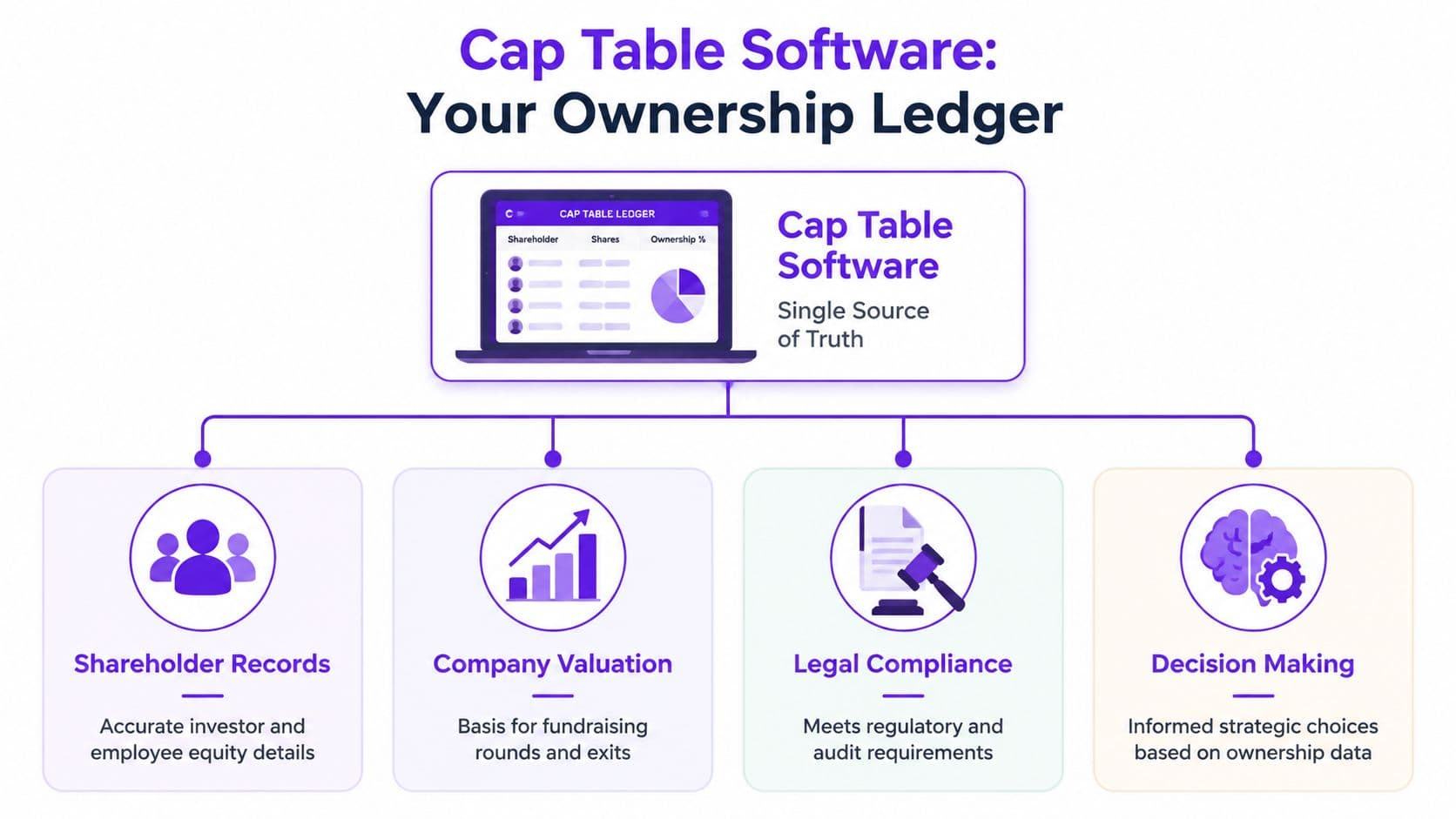
It's your single source of truth for ownership. It records who owns what, what rights attach to those securities, and how every transaction changed the company over time. One industry guide explains that a capitalization table typically records each stakeholder's shares, ownership percentage, valuation, and special terms, and uses the formula Ownership % = (Shares held / Total diluted shares) × 100. That same guide notes that modern software tracks every issuance, transfer, and exercise so ownership updates consistently as the cap table grows (Hyperbots on capitalization table software).
A worked example with actual numbers
Let's keep it simple.
Assume your company has these fully diluted shares before a new grant:
| Holder | Shares |
|---|---|
| Founder A | 600,000 |
| Founder B | 300,000 |
| Investor Seed | 100,000 |
| Total diluted shares | 1,000,000 |
Ownership percentages are:
- Founder A = 600,000 / 1,000,000 × 100 = 60%
- Founder B = 300,000 / 1,000,000 × 100 = 30%
- Investor Seed = 100,000 / 1,000,000 × 100 = 10%
Now you approve a new employee option grant for 50,000 shares and include it in diluted shares.
New total diluted shares = 1,050,000
Updated ownership becomes:
- Founder A = 600,000 / 1,050,000 × 100 = 57.14%
- Founder B = 300,000 / 1,050,000 × 100 = 28.57%
- Investor Seed = 100,000 / 1,050,000 × 100 = 9.52%
- Employee option grant = 50,000 / 1,050,000 × 100 = 4.76%
That's not hard math. It's fragile math.
In Excel, one bad reference can leave the old denominator in place and show inflated ownership for everyone. Capitalization table software updates this systematically and keeps the transaction attached to the underlying event.
It matters more when terms get messy
The hard part isn't common stock. The hard part is convertibles, SAFEs, warrants, option pool changes, and as-converted views across rounds.
If you need a legal primer on how those early instruments differ, this explanation of navigating early-stage investment terms is a solid companion read. Finance needs that legal context because your cap table has to reflect the economics correctly, not just list names and numbers.
A cap table should answer operational questions fast: who owns what today, what changes after the next round, and what support exists for every line item.
That's why I tell clients to stop thinking of cap table software as admin tooling. It's closer to a deed registry for your business. It informs fundraising, board approvals, and option planning in the same way valuation logic informs post-money valuation decisions. If the record is weak, every downstream decision gets weaker too.
Core Features Your Business Actually Needs
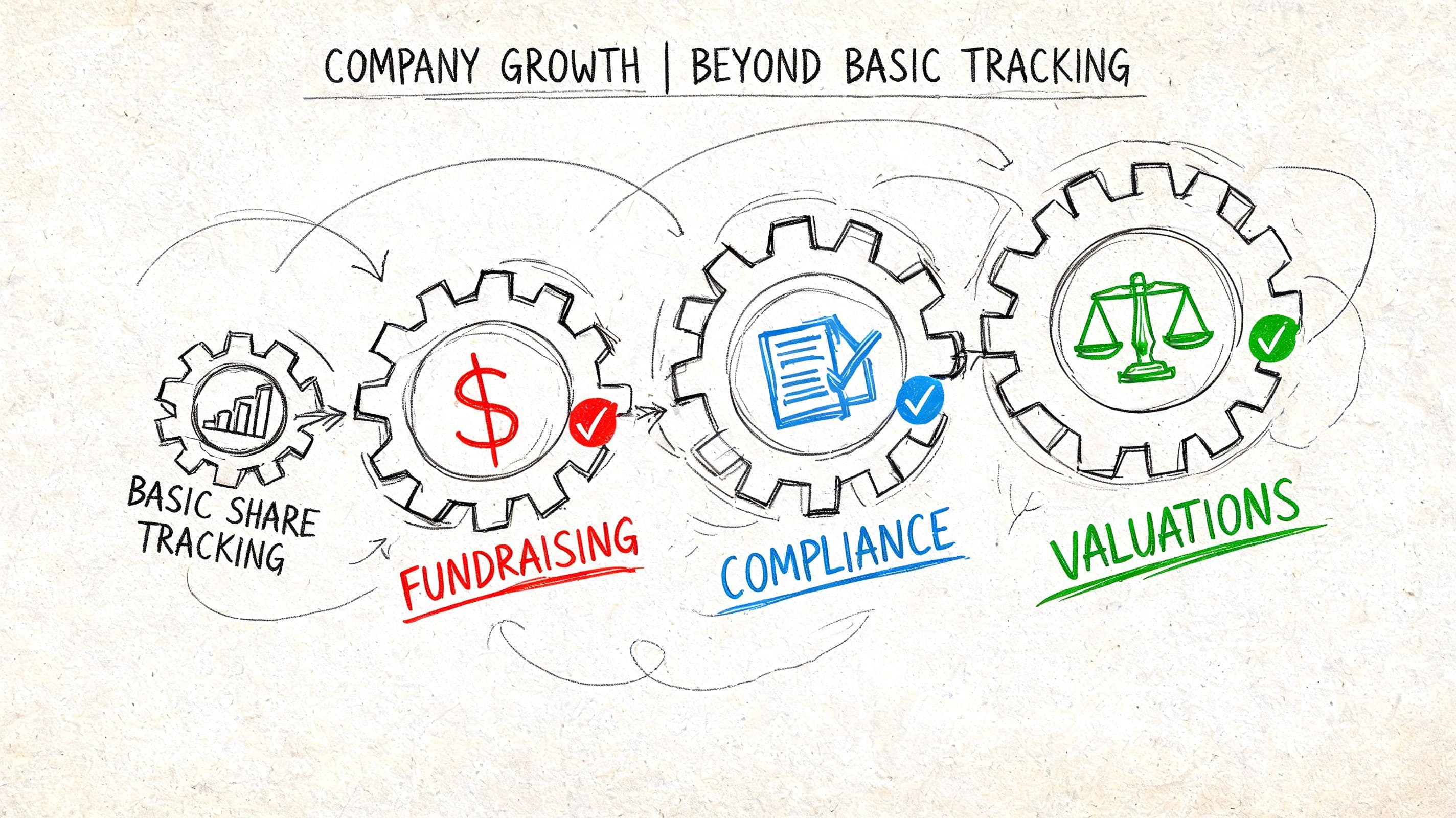
At your stage, generic feature lists are useless. You don't need a toy cap table app. You need a system that helps finance keep equity records accurate, supports real reporting, and stands up when investors or auditors start asking questions.
One buyer-focused guide gets this right: the highest-value capabilities are real-time reporting, scenario modeling, and integrations that preserve data integrity, with automated updates and API-based connections to accounting and HR tools so equity data stays synchronized and auditable across finance, legal, and investor-relations workflows (Astrella on must-haves in cap table management software).
Real-time reporting that finance can trust
Your finance team needs current share counts, current grant data, and a reliable history of changes. Leadership needs fast answers before approving new equity. Investors want clean reports, not manual spreadsheets exported at midnight.
If the platform can't produce a clean current ownership view and a defensible history of transactions, skip it.
Scenario modeling that handles actual decisions
Spreadsheets waste executive time here.
You need to model what happens if you:
- Expand the option pool before a raise
- Issue new grants to leadership hires
- Convert notes or SAFEs into priced equity
- Run dilution scenarios for different round structures
A founder should be able to ask, “What happens to founder ownership if we add 100,000 shares to the pool before the round?” and get a clean answer without rebuilding a workbook.
Here's a simple worked example.
Current diluted shares: 1,050,000
Founder A shares: 600,000
If you expand the option pool by 100,000 shares, new diluted shares become 1,150,000.
Founder A's revised ownership:
600,000 / 1,150,000 × 100 = 52.17%
Before the pool increase, Founder A held 57.14%. After it, Founder A holds 52.17%.
That difference is exactly why scenario modeling matters. One board-approved change affects every stakeholder.
Integrations are not optional
If your HRIS says one employee started on a certain date, payroll says something else, and the cap table shows a grant approved on a third date, your controls are broken.
The right platform should connect to the rest of your finance stack so you can manage equity alongside payroll, employee changes, and accounting. That matters even more when your bookkeeping function already relies on integrated systems, whether internal or outsourced through support like startup bookkeeping services.
Here's the practical view:
| Capability | Why it matters | What to look for |
|---|---|---|
| HRIS integration | Keeps employee status and grant administration aligned | Support for your people system and clean user permissions |
| Accounting integration | Reduces manual reconciliation and reporting gaps | Exportability, API access, structured reports |
| Audit trail | Proves who changed what and when | Transaction-level history and timestamps |
| Document linkage | Ties records back to approvals and legal docs | Grant docs, consents, and signed agreements attached in-system |
A short walkthrough can help you see how these workflows fit together in practice:
Common objection I hear from founders
“We don't have that many shareholders yet.”
That misses the point. Complexity doesn't start with volume. It starts with edge cases. A handful of stakeholders plus employee options, one SAFE, and a pending raise is already enough to justify a controlled system.
The feature that matters most is not the flashy one. It's the one that lets finance answer hard questions quickly, with backup.
Evaluating and Choosing the Right Platform
The market is crowded, but the decision is simpler than vendors want you to believe. Core cap table management and scenario modeling are now standard across major tools, while advanced functions differ by provider. A 2026 comparison also shows published entry pricing across tiers, including Cake Equity at $540 per year for 5 stakeholders and Pulley at $1,200 per year for 25 stakeholders (Cake Equity software comparison guide).
That tells you two things. First, there are accessible options. Second, price alone won't choose the right system for you.
Use stage and complexity to narrow the field
For a founder-led business moving off spreadsheets, the first question is not “Which vendor is best?” It's “Which platform fits our current structure and our next round of complexity?”
| Vendor Tier | Example Platforms | Ideal Customer | Typical Pricing Model | Key Strength |
|---|---|---|---|---|
| Early-stage | Cake Equity, Pulley | Small teams formalizing equity records | Published annual plans tied to stakeholder counts or plan tiers | Fast adoption and straightforward ownership management |
| Growth-stage | Carta, Ledgy | Companies with broader reporting, multi-round history, and more complex needs | Custom or tiered pricing depending on scope and features | Deeper compliance, reporting, and advanced workflows |
| Enterprise-grade | Shareworks | Larger private companies with heavier governance and administration needs | Custom pricing | Institutional processes and broader equity infrastructure |
The five demo questions that matter
Most demos waste time on interface polish. Ask these instead.
-
How does the platform handle SAFEs, convertible notes, warrants, and option pool changes?
If the answer is vague, move on. -
Can we export the full transaction history, not just a current snapshot?
Data portability matters. You do not want vendor lock-in around your ownership records. -
What does the audit trail show for each equity event?
You need user, timestamp, transaction type, and linked support. -
How do accounting and HR integrations work in practice?
Ask what data syncs, what stays manual, and what breaks when employee records change. -
What does implementation require from legal, finance, and leadership?
If they pretend migration is push-button, they're hiding the hard part.
Decision test: Choose the system your finance lead can defend in diligence, not the one with the slickest homepage.
A practical shortlist approach
Don't evaluate six vendors. Evaluate two or three.
Start with one platform designed for straightforward startup administration and one designed for broader compliance and reporting. Then run your own real scenarios through both:
- current cap table import
- one new option grant
- one option pool expansion
- one fundraising model
- one export package for diligence
If your company is already preparing for financing or a transaction, line that evaluation up with a broader financial due diligence checklist. Cap table software should make diligence easier, not create another workstream to clean up.
A good platform feels boring in the best way. The records are clear. The math is consistent. The exports are usable. Finance can rely on it.
Implementation Best Practices and Red Flags
Software doesn't solve a broken cap table by itself. If your historical records are messy, the new platform will preserve a cleaner-looking mess.
That's why implementation matters more than the demo.
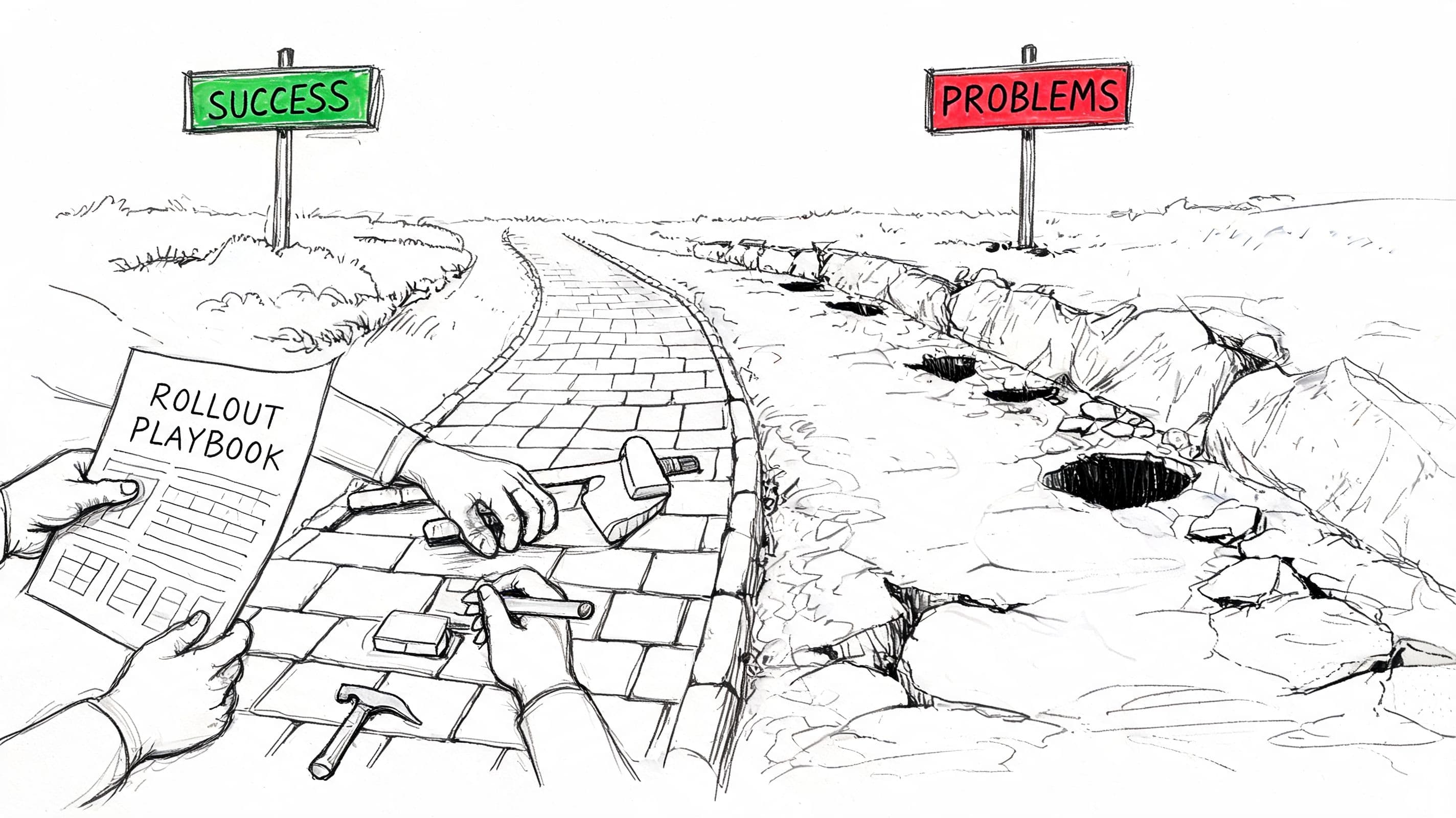
A recent buying guide framed the issue correctly: the operational and compliance burden of implementation is a major concern, and audit-readiness has become a real differentiator because finance leaders need to prove the system is reliable enough for due diligence (Qapita on cap table software and audit-readiness).
Clean the history before you migrate
Do not import first and reconcile later. Reconcile first.
Your migration package should include:
- Board approvals for issuances, grants, exercises, cancellations, and transfers
- Signed legal documents tied to each instrument
- Grant dates and vesting data matched to employee records
- Historical spreadsheets only as reference, not as unquestioned truth
- A defined owner for final signoff on imported data
An outsourced controller earns their keep by handling these critical tasks. Someone has to reconcile documents, test diluted share counts, and make sure finance, legal, and leadership all sign off on the same record. Firms such as Jumpstart Partners handle that kind of cleanup and migration work as part of broader outsourced controller support.
Integrate with the systems that create equity events
Cap tables don't change in isolation. Hires, terminations, grant approvals, financing events, and accounting close processes all trigger updates.
If you want the system to stay clean, assign responsibilities clearly:
| Workflow | Primary owner | Control point |
|---|---|---|
| New employee equity grant | Finance with HR input | Approved grant and effective date match |
| Exercise or transfer | Finance and legal | Supporting docs attached before posting |
| Board-approved equity event | Finance | Minutes and transaction entered together |
| Reporting for diligence | Finance | Export reviewed against source documents |
The implementation goal is simple. Every equity event should move through one approved process, in one system, with one traceable record.
Red flags that should end the conversation
Some vendors fail the test immediately.
- No clear audit trail. If they can't show transaction-level history, walk away.
- Weak exportability. If exports are clumsy or incomplete, diligence will be painful.
- Unclear security posture. Ask how they protect sensitive equity records. If your team needs a quick primer on evaluating security weaknesses in SaaS environments, this article on how to find software vulnerabilities fast is useful context.
- Messy permissions. Role-based access should be obvious and enforceable.
- Implementation hand-waving. “We'll import your spreadsheet” is not an implementation plan.
A cap table system has to survive audits, financing, and management turnover. If the controls are weak on day one, they won't improve under pressure.
Secure Your Equity with a Single Source of Truth
A spreadsheet cap table feels cheap right up until it delays a raise, creates a board issue, or forces a legal cleanup. Then it becomes one of the most expensive “simple” tools in your business.
The right capitalization table software gives you something more valuable than convenience. It gives you control. Finance can track ownership accurately. Leadership can model decisions quickly. Investors and auditors can review a record that holds up under scrutiny.
What you should do next
First, open your current cap table and test it.
Can you answer these questions in under ten minutes, with backup?
- Current fully diluted shares
- Ownership after a new option grant
- Effect of an option pool expansion
- Status of any SAFEs, notes, or other convertibles
- Support for each material transaction
If the answer is no, replace the spreadsheet.
Second, shortlist two platforms based on your stage and complexity. Run real scenarios, not demo scenarios. Import a sample. Test one grant. Test one dilution model. Test one diligence export.
Third, connect the cap table to your broader finance records. Equity shouldn't sit outside your accounting logic, HR records, and governance workflow. The same discipline that keeps your cap table clean also improves core reporting, which is why finance leaders should view it alongside foundational records like the general ledger.
Clean equity records build confidence. Sloppy equity records invite questions at exactly the wrong time.
You don't need more software. You need a system of record you can trust.
If your cap table still lives in Excel, it's time to fix it before the next board meeting or diligence request forces the issue. Jumpstart Partners provides outsourced controller support for growing businesses and can help you evaluate capitalization table software, clean historical records, manage migration, and build an audit-ready process around equity administration.