Financial Operations
10 Best Financial Modeling Templates for 2026
Find the best financial modeling templates for SaaS & agencies. Download free & paid models for fundraising, audits, and strategic business planning.
ByJumpstart Partners, CPA, QuickBooks ProAdvisor
··25 min readOnly one kind of model survives investor scrutiny: one that shows how revenue, margins, working capital, debt, and cash move together in the same file. If your spreadsheet cannot show what happens to cash when growth drops, hiring ramps, or churn spikes, it is not a model. It is a liability.
Founders between $1M-$5M ARR usually outgrow a simple budget long before they admit it. A lender wants to see debt service capacity. An investor wants to see hiring efficiency, burn, and runway. Your leadership team needs a forecast that ties decisions to cash, not a loose revenue plan with expense guesses underneath it.
Start with the right category of template. General templates help you build core finance structure: three-statement models, cash flow forecasts, valuation schedules, and operating plans. Specialist templates go further for businesses with recurring revenue, cohort behavior, deferred revenue, inventory complexity, or channel-specific economics. That distinction matters. A generic model is the right starting point for many companies, but a SaaS founder who stops there usually misses churn dynamics, expansion revenue, CAC payback, and cash timing.
This guide takes a more practical approach than a simple top-10 list. It separates generalist templates from specialist models, shows how to adapt a standard template for a SaaS business, and gives you a validation checklist to pressure-test assumptions before an investor does. If your cash flow structure is weak, rebuild it with a proper cash flow statement template in Excel before you worry about polish.
Good templates save time and improve decisions. Bad templates hide problems until diligence.
See what happens to cash before an investor does
Our 13-week cash flow forecasting tool turns a static model into a rolling view of runway, hiring, and burn.
Get the cash flow forecasting tool1. Corporate Finance Institute CFI Excel Modeling Templates
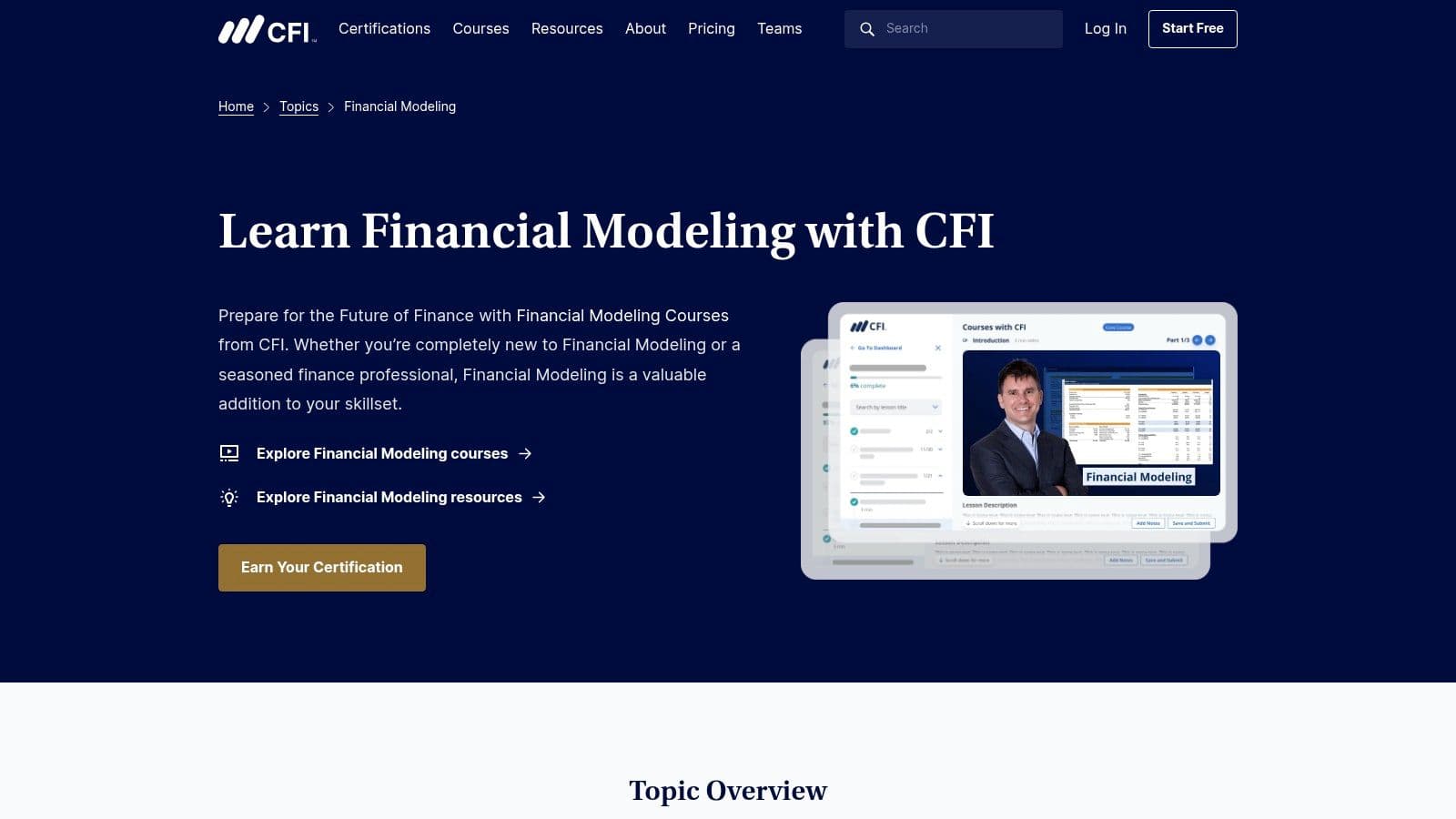
CFI is the cleanest starting point if you need general financial modeling templates without paying upfront. The library covers core formats founders use: three statement models, DCF structures, valuation schedules, and supporting worksheets you can lift into your own file.
I recommend CFI when your current problem is structural, not industry-specific. If your model is a mess and you need disciplined assumptions tabs, clear outputs, and standard financial statement flow, this is a strong reset.
Why it works
The biggest advantage is consistency. CFI tends to organize assumptions, calculations, and outputs in a way that junior staff can follow and senior finance people can review quickly.
That matters because most founder-built models fail in predictable ways:
- Inputs are scattered: assumptions sit inside formulas
- Statements don’t link cleanly: cash flow is treated like an afterthought
- No audit trail exists: nobody knows what changed and why
If you need a better cash flow backbone, pair this with Jumpstart’s cash flow statement template in Excel and rebuild your forecast from the cash line upward.
Best fit and limits
Use CFI if you’re:
- Building your first real forecast: You need financial discipline more than fancy dashboards.
- Standardizing a team process: Everyone can work from the same format.
- Creating valuation support: DCF and supporting schedules are already familiar to lenders and investors.
Skip it if you want SaaS-specific MRR logic out of the box. You’ll still need to add subscription metrics, deferred revenue logic, and customer acquisition assumptions yourself.
Practical rule: Use CFI for the skeleton, then customize the revenue engine for your business model. Don’t force a generic revenue tab to do a SaaS job.
Get the templates directly from CFI’s Excel modeling template library.
2. Macabacus Free Excel Model Templates plus Modeling Add-in
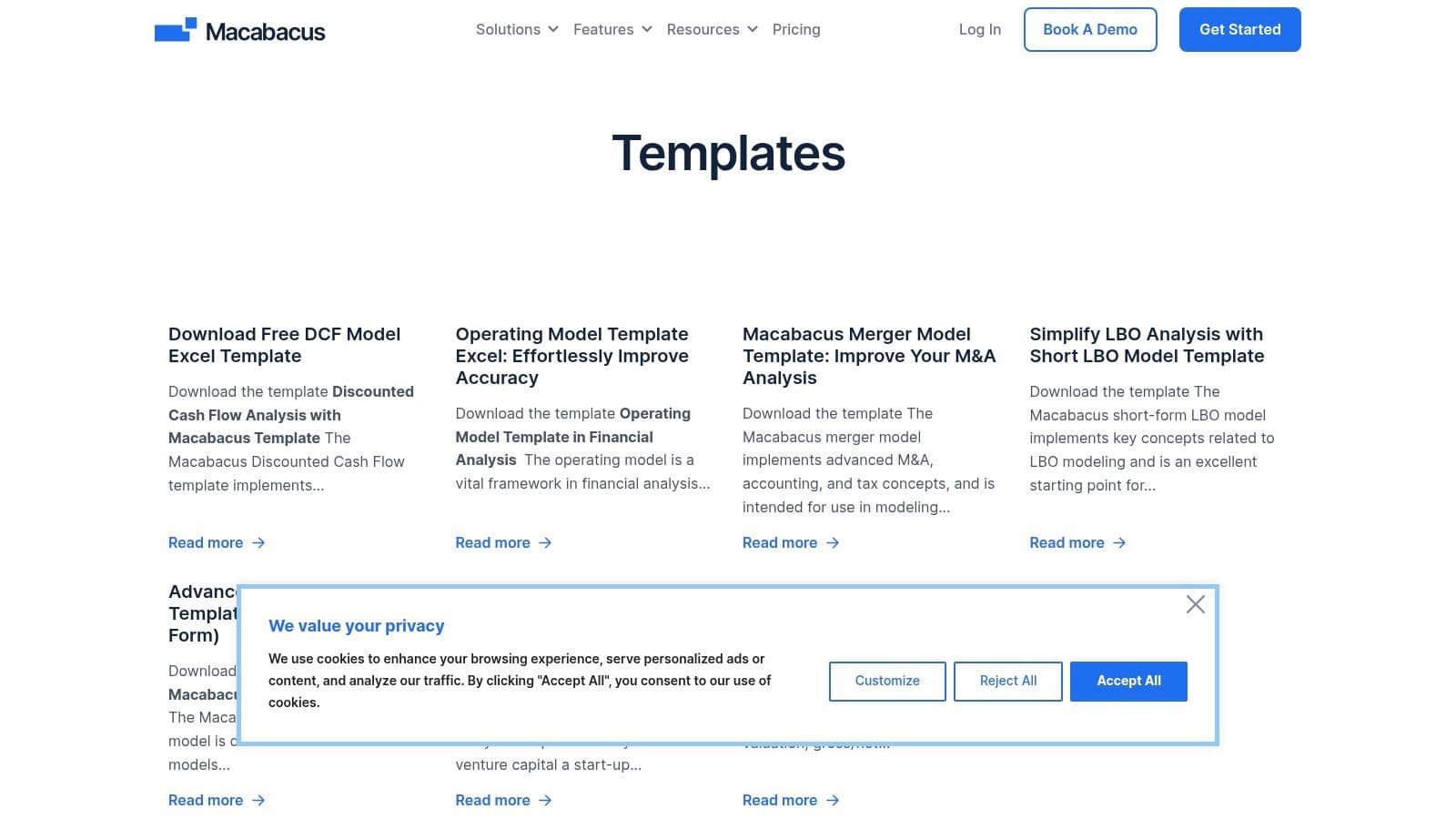
Macabacus is for founders and finance teams who already know Excel reasonably well and want more rigor. The templates are finance-heavy and modeled after investment banking and private equity standards. That’s useful when your business is entering lender conversations, acquisition analysis, or board-level scenario work.
Actual value sits in the add-in. The free templates are solid, but the audit and formatting tools are what make Macabacus worth your attention if your team spends serious time inside Excel.
Where Macabacus stands out
Macabacus helps when your issue isn’t the template itself. It’s model hygiene. Founders routinely underestimate how much time gets wasted on tracing precedents, checking broken links, and cleaning formatting before a board meeting.
If you’re presenting a model externally, sloppiness costs credibility fast.
- Audit support: Better tracing and error checks reduce review friction.
- Formatting discipline: Standardized presentation makes the file easier to review.
- Professional conventions: Helpful if your audience includes bankers, PE operators, or debt partners.
If your team already relies on spreadsheets heavily, it’s worth understanding how add-ins in Excel can remove repetitive work.
My take
I wouldn’t hand Macabacus to a non-finance founder and expect magic. It assumes a level of modeling maturity. But if you have a controller, FP&A lead, or controller-led finance ops building serious models, Macabacus is a smart upgrade.
The weakness is obvious. It’s generic. It won’t solve SaaS forecasting on its own, and it won’t teach you your business model.
Get the templates from Macabacus template downloads.
3. Wall Street Prep Free LBO Modeling Templates and Guides
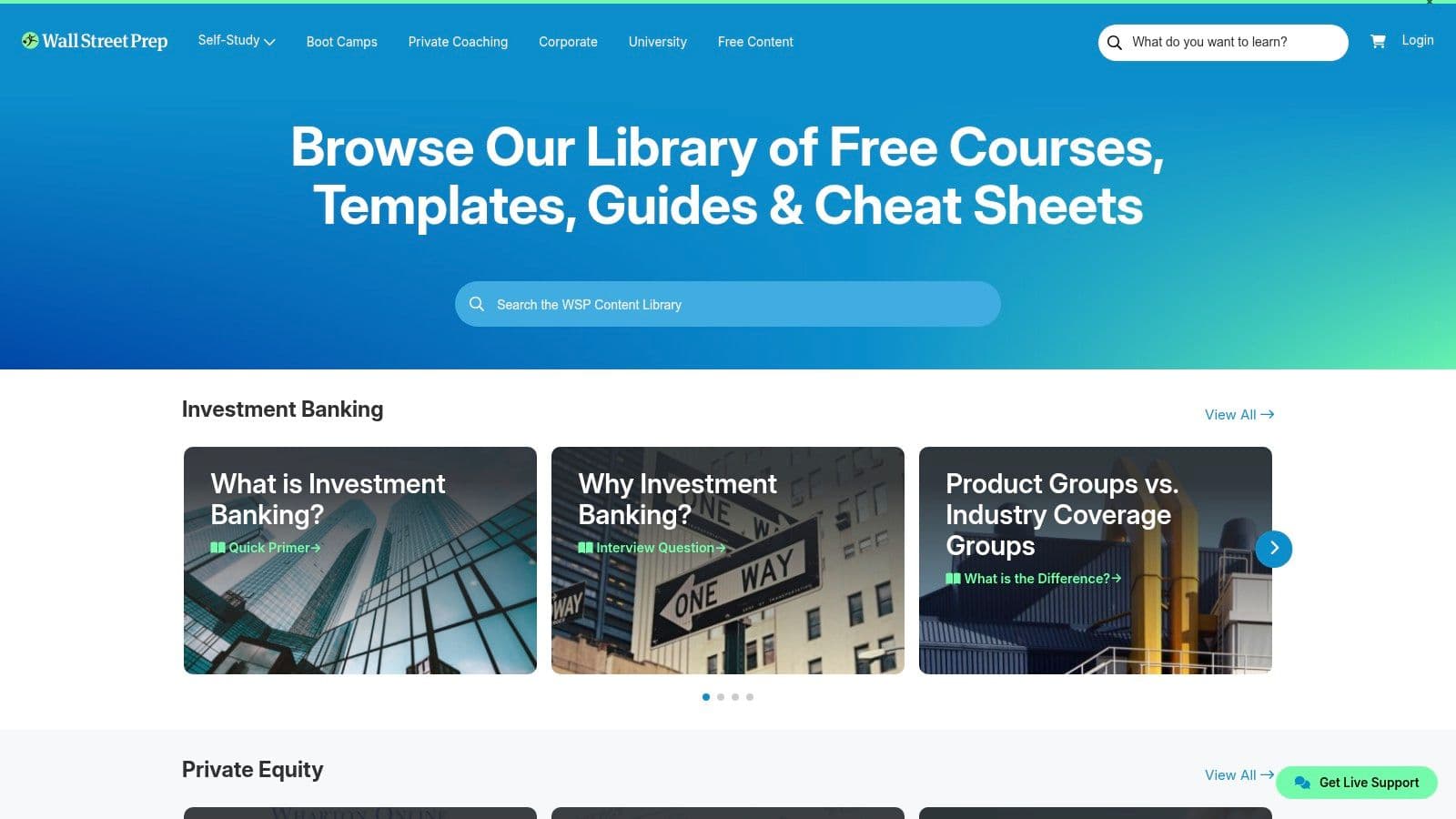
Wall Street Prep is less useful as a founder operating model and more useful as a training system. That distinction matters. If you’re trying to teach a finance hire how to structure scenarios, build linked statements, or think through transaction-style analysis, this is one of the better places to start.
Its short-form LBO and supporting tutorials are especially useful for teams dealing with acquisition targets, recap discussions, or ownership transition planning.
Use it for team capability
A lot of companies between $1M and $5M ARR outgrow founder finance before they admit it. The business gets more complex, but the model still reflects startup shortcuts. Wall Street Prep helps close that gap because it teaches method, not just file usage.
That makes it valuable for:
- Training analysts or controllers: Better consistency in how models are built
- Scenario work around transactions: Debt, equity, or acquisition cases
- Standardizing techniques: Less freelancer-style modeling, more repeatable finance process
Strong finance teams don’t just own a template. They share a modeling language.
Where it falls short
This isn’t the best option if you need SaaS metrics, agency utilization planning, or product-line segmentation straight away. The materials lean toward banking and private equity workflows.
That said, I like Wall Street Prep for founders who need to sharpen an internal finance function before they invest in a more specialized model. It helps your team stop treating forecasting like a one-tab spreadsheet exercise.
You can browse the downloads and guides through Wall Street Prep free resources.
4. Aswath Damodaran NYU Stern Valuation Spreadsheets and Data
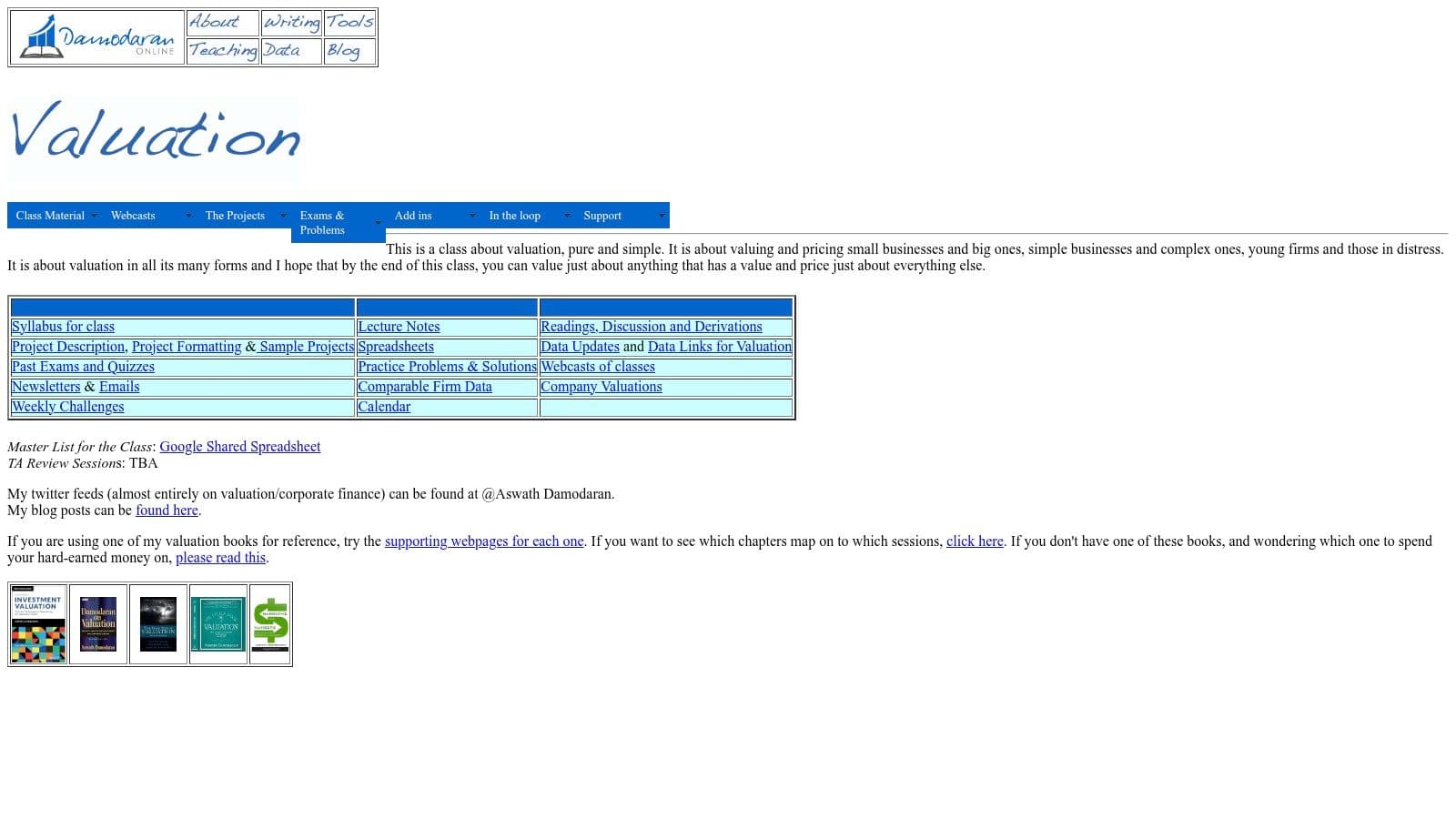
If you care about valuation quality, use Damodaran’s spreadsheets. If you need a full operating model, don’t. This is a valuation toolkit, not a company planning system.
That’s not a criticism. It’s exactly why the resource is so useful. Most founders blur forecasting and valuation into one messy file. They shouldn’t.
Best use case
Use these spreadsheets when you need to answer valuation questions with more discipline. Maybe you’re discussing a round price, pressure-testing a DCF, or evaluating capital allocation decisions. Damodaran’s materials are excellent for those jobs.
They’re also a strong supplement to a broader startup valuation process. If you’re framing investor conversations, read Jumpstart’s perspective on the valuation of startup companies alongside your operating model assumptions.
CFO recommendation
Don’t use Damodaran’s sheets as your primary company model. That’s the wrong tool. Use them as a block inside your financial toolkit.
- For valuation logic: Strong choice
- For budgeting and hiring plans: Wrong choice
- For investor pricing discussions: Very useful if you know what inputs you’re defending
The downside is navigation. The file repository can take some digging. But serious finance people already know that the best resources aren’t always packaged for convenience.
Access the spreadsheets from Aswath Damodaran’s valuation page at NYU Stern.
5. Foresight by Taylor Davidson Startup and SaaS E-commerce Templates
Foresight is one of the better paid options for founders who need a model that feels usable on day one. It’s designed for startup realities, not textbook finance purity. That makes it practical.
The editable formulas are a big advantage. You’re not trapped inside a black box, and that matters when your revenue model changes, your pricing changes, or an investor asks for a different view.
Why founders like it
Foresight sits in a useful middle ground. It’s more purpose-built than generic financial modeling templates, but it isn’t so dense that only a trained modeler can operate it.
That makes it a good fit if you’re:
- Preparing for fundraising: You need clean outputs and editable assumptions.
- Running a startup finance process without a full FP&A team: The structure is accessible.
- Choosing between model complexity and speed: Foresight is balanced.
If you’re building from the startup stage upward, Jumpstart’s guide to financial modeling for startups is a good companion framework.
Where you still need discipline
Buying a founder-friendly model doesn’t remove the hard part. You still need to define your key inputs correctly. Revenue streams, churn drivers, hiring plans, payment timing, and gross margin assumptions still have to reflect reality.
Many founders get lazy. They buy a better template and keep weak assumptions.
Get the current options from Foresight templates.
6. 50Folds Alexander Jarvis Advanced SaaS and Subscription E-commerce Models

SaaS companies that raise successfully are judged on a small set of numbers. MRR growth, gross retention, net retention, CAC payback, and burn efficiency usually decide whether an investor sees a real operating business or a dressed-up spreadsheet. 50Folds fits the second category on this list. It is a specialist template, built for founders who need to explain subscription economics in detail, not just total revenue.
That distinction matters. Generic templates are fine for simple planning. A specialist SaaS model should show what changed, why it changed, and which operating lever caused it. Jarvis’s models are built for that level of scrutiny, especially if you sell across multiple channels, track expansion revenue, or run a subscription e-commerce business with repeat purchase behavior layered on top of standard SaaS metrics.
Why I’d recommend it
Use 50Folds when your company has outgrown a founder-built three-tab model.
A serious SaaS template should let you model:
- new MRR by acquisition source
- churn and contraction separately from expansion
- pricing by segment or plan
- sales and marketing spend tied to customer acquisition
- headcount and departmental P&L allocation
- investor-facing dashboards that do not require manual cleanup
That is the difference between a general template and a specialist one. General models tell you whether the business can survive. Specialist models tell you whether the growth engine is efficient.
If ARR is central to your fundraising case, get your metric definitions straight before you touch the formulas. Founders routinely mix bookings, ARR, committed ARR, and recognized revenue. That creates avoidable credibility problems. Use this guide to annual recurring revenue definitions and calculation methods and align your model to one standard.
Worked example: customizing a generic model for SaaS
Here is the mistake I see all the time. A founder starts with a standard revenue line, adds a growth rate, and calls it a SaaS forecast. That is not a SaaS model.
Convert a generic model like this:
- replace one revenue growth assumption with new customers, starting ARPA, expansion, churn, and contraction
- split customer acquisition into paid, outbound, partner, and organic if those channels perform differently
- tie CAC by channel to actual spend instead of using one blended assumption
- model gross margin after hosting, support, and payment processing, not as a flat placeholder
- reconcile ending customers, ending MRR, and cash collections every month
A simple example proves the point. If you add 40 customers per month at $250 MRR, lose 3 percent of starting MRR to churn, and gain 2 percent from expansion, your ending MRR behaves very differently than a flat 8 percent monthly growth assumption. Investors who know SaaS will catch that gap immediately.
The downside
This model is not for an idea-stage founder with five customers and no reporting discipline. It has enough depth to confuse a team that does not already track the basics every month.
Use it if you have real operating data and want a model that matches how the business runs. Skip it if you still need a first-pass planning tool. Complexity should reflect business reality, not compensate for missing financial thinking.
Before you show any specialist model to investors, run a validation check:
- does beginning cash reconcile to ending cash every month
- do customer counts tie to MRR movement
- do hiring dates flow into payroll expense correctly
- do CAC and payback assumptions match your actual last two quarters
- do expansion and churn assumptions reflect observed retention patterns, not founder optimism
- does the board deck use the same metric definitions as the model
See the current options at Alexander Jarvis SaaS financial model templates.
7. ProjectionHub 100 plus CPA-Prepared Industry Templates
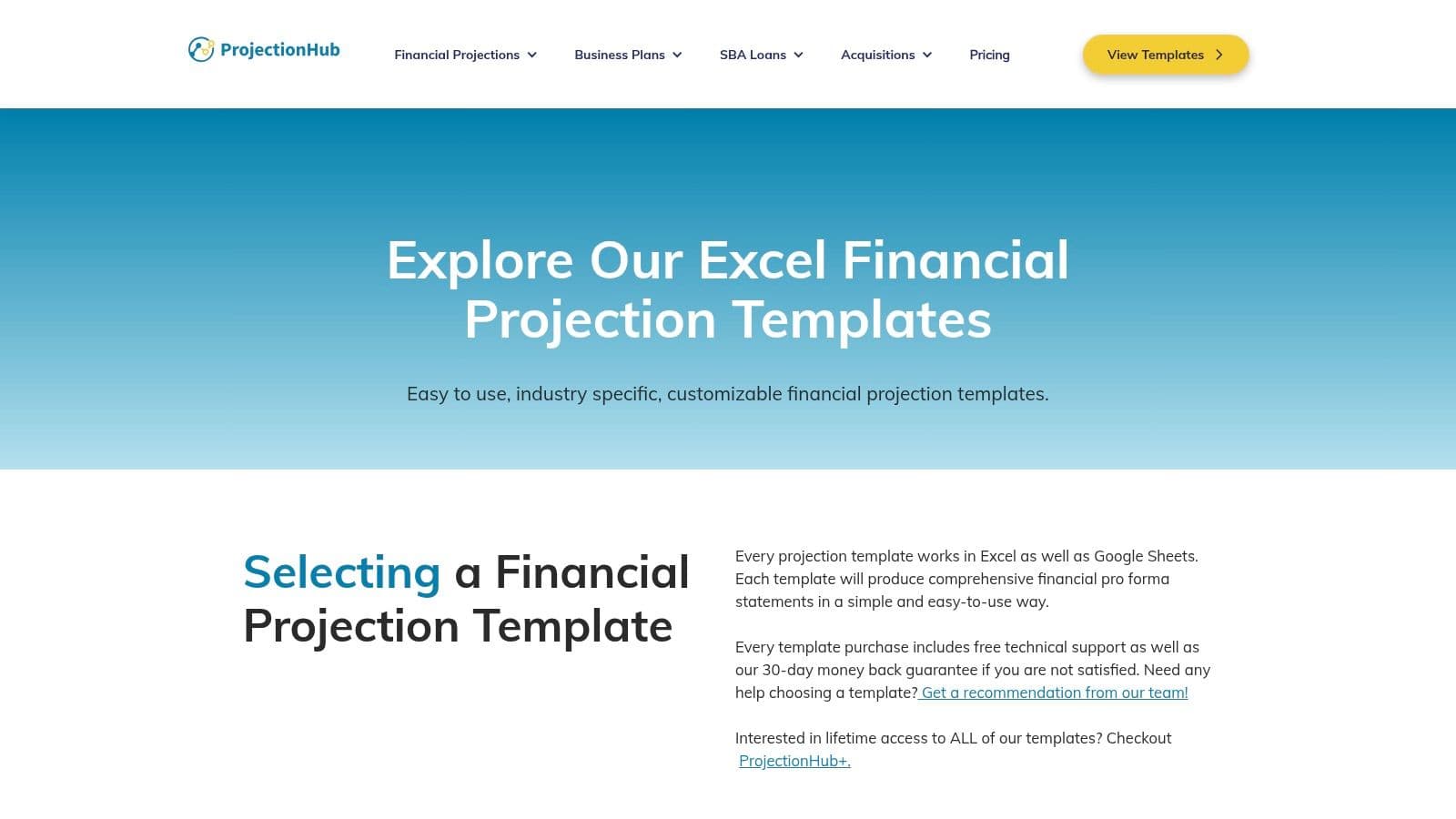
Founders usually waste time in one of two ways. They start from a blank sheet and spend days building basic statements, or they grab a generic template that ignores how their industry makes money. ProjectionHub fixes the first problem better than the second.
This is a general-use template library with industry-specific starting points. That distinction matters. If you run an agency, clinic, restaurant, or local service business, a CPA-prepared model can get you to a credible first draft much faster than a blank workbook. If you run a SaaS company with cohort retention, deferred revenue, and expansion motion, this is a starting point, not the finish line.
Where ProjectionHub fits
Use ProjectionHub when you need a clean first-pass model for a lender, SBA package, budget, or fundraising prep and your revenue model is straightforward enough to map into standard operating drivers.
That is the advantage here. You get pre-built income statement, balance sheet, and cash flow structure without paying a finance consultant to assemble version one. For a founder who needs something usable this week, that matters.
What founders get wrong
“CPA-prepared” does not mean “investor-ready for your exact business.”
I see founders import template assumptions and stop thinking. Bad move. A template can organize your forecast, but it cannot tell you whether your sales cycle is realistic, whether payroll timing is correct, or whether working capital will squeeze cash in month four.
ProjectionHub is strongest in general business cases. It is weaker in specialist cases that need custom operating logic. That is the useful way to categorize templates across this guide. General templates help you get the structure right. Specialist templates help you get the business mechanics right.
How to use it well
Start with the closest industry file, then replace template logic with your own operating drivers.
For example, if you adapt a general ProjectionHub model for a SaaS business, do not leave revenue as a simple monthly growth line. Build it from new customers, average contract value, churn, expansion, and cash collection timing. If you start with 120 customers at $300 MRR, add 15 per month, lose 2 percent of starting customers, and expand existing revenue by 1 percent, your revenue path will look very different from a flat growth assumption. That is the difference between a planning file and a finance model.
Before you send any ProjectionHub file to an investor or lender, run a short validation check:
- cash should reconcile every month
- debt balances should roll forward correctly
- headcount additions should flow into payroll in the right month
- gross margin assumptions should match actual recent results
- revenue drivers should reflect how you bill customers, not how the template labels a row
Use ProjectionHub if speed and structure are the priority. Upgrade or rebuild the model once the business gets more complex.
Browse the catalog at ProjectionHub financial projection Excel templates.
8. eFinancialModels Marketplace of Industry Financial Models
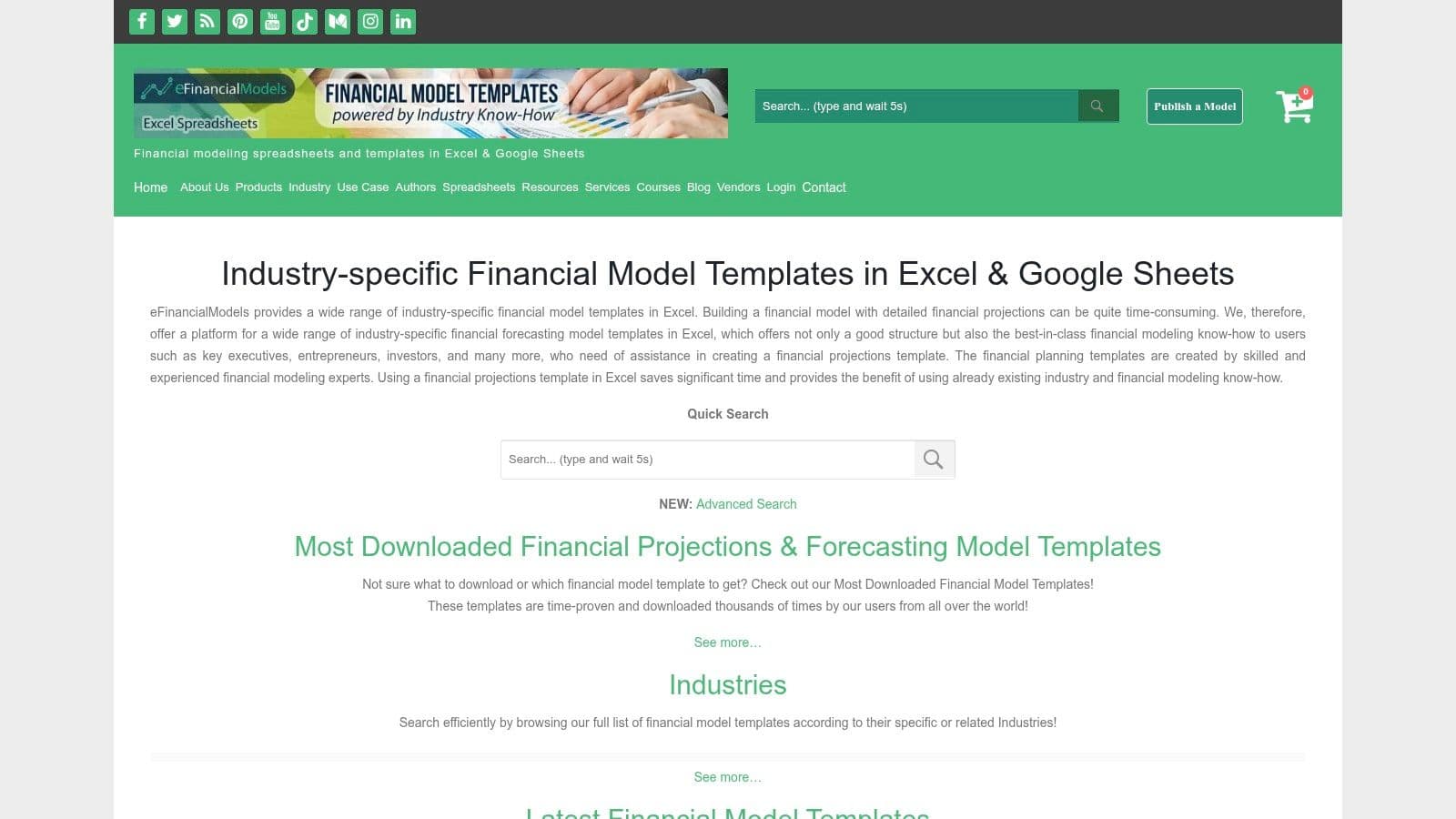
eFinancialModels is a marketplace, not a single modeling philosophy. That’s both the benefit and the risk. If you operate in a niche vertical, this is one of the fastest ways to find a near-match model without commissioning something custom.
You should treat it like hiring a contractor. Review the work before you trust it.
What makes it useful
The breadth is the appeal. You can find financial modeling templates for sectors that most template libraries ignore. For founders in specialty services, manufacturing, or unusual business models, that can save a lot of time.
Preview documentation also helps you judge whether a file is worth buying before you commit.
What to watch closely
Quality varies by author. Some models are thoughtful and well-structured. Some are dressed-up calculators.
Review these before purchase:
- Revenue logic: Does it match how your business bills?
- Statement integration: Are income statement, balance sheet, and cash flow linked?
- Assumption visibility: Can you quickly identify and change drivers?
- Support quality: Is there documentation that explains the file?
If your finance lead can’t understand the model in a reasonable review, don’t buy it. A template that nobody can audit is a liability.
Explore options at eFinancialModels.
9. Kruze Consulting Simple Startup Projection Model Excel
Kruze’s simple startup projection model is the right answer when your current model is no model at all. If you’re still managing the business from a bank balance and a rough monthly spend estimate, start here.
A lightweight file is better than a fantasy enterprise model you’ll never maintain.
Good starter model for early discipline
This template works well for first-pass budgets, runway analysis, and pitch-deck projections. It’s straightforward, and that’s the point. Early-stage teams usually need decision support, not modeling theater.
If you need a simple baseline before building something more advanced, compare it with Jumpstart’s startup financial model template and choose the structure your team will use.
The limitation you need to accept
Simple models break once the business gets more layered. The moment you have multiple revenue streams, hiring waves, deferred revenue issues, or channel-specific CAC assumptions, you’ll outgrow it.
That’s fine. A starter model doesn’t need to last forever. It needs to give you an honest first view of runway and spending discipline.
Get the model details from Kruze Consulting’s startup financial models guide.
10. The SaaS CFO Ben Murray SaaS Financial Model and KPI Templates
SaaS companies live or die on a few ratios. If your model cannot show MRR movement, gross retention, net revenue retention, CAC payback, and burn by month, you are not running finance. You are guessing.
Ben Murray’s templates stand out because they are specialist tools, not generic planning sheets with “SaaS” added to the title. That distinction matters. General templates help you get a budget on paper. Specialist templates help you explain why growth is accelerating, stalling, or destroying cash.
Why SaaS leaders should pay attention
A good SaaS model should handle recurring revenue logic directly: new bookings, expansion, contraction, churn, deferred revenue, and cohort behavior. Founders routinely skip that structure and then wonder why board numbers, billing reports, and P&L results do not tie out.
Ben Murray’s materials are useful because they connect the model to the operating review. You are not just filling in revenue assumptions. You are building the KPI pack investors expect to see and the management view your team should already be using.
That is the right use case for a specialist template category in this guide.
Best use case
Choose The SaaS CFO if you need:
- A specialist SaaS model: Better for subscription businesses than a general 3 statement template
- KPI reporting built into planning: Useful for board decks, lender updates, and monthly reviews
- A template you can validate: You can stress test churn, pricing, sales efficiency, and hiring against actual SaaS benchmarks before sending it to investors
Here is the practical standard I would use. If a $100,000 ARR business grows to $250,000 ARR in the model, you should be able to trace exactly how much came from new customers, expansion, and churn reduction. If you cannot do that in a few clicks, the model is too weak.
The main drawback is packaging. The resources are spread across multiple posts and downloads, so setup takes more effort than a single file marketplace purchase. For a founder with a real SaaS business, that is a fair trade.
See the available files at The SaaS CFO all SaaS models page.
Top 10 Financial Modeling Templates Comparison
| Provider | Core features | Quality ★ | Price/Value 💰 | Audience 👥 | Unique selling point ✨🏆 |
|---|---|---|---|---|---|
| Corporate Finance Institute (CFI) – Excel Modeling Templates | Library of 3‑statement, DCF & valuation templates; clean assumptions layout | ★★★★ | 💰 Free, high baseline value | 👥 Students, analysts, DIY finance teams | ✨ Consistent, ready‑to‑adapt templates for quick builds |
| Macabacus – Free Templates + Modeling Add‑in | IB/PE‑style templates + paid add‑in for FAST formatting & audit | ★★★★ | 💰 Freemium, free templates, paid add‑in | 👥 Investment bankers, PE analysts, power users | ✨ Add‑in boosts productivity & model tracing 🏆 |
| Wall Street Prep – Free LBO/Modeling Templates & Guides | Short‑form LBOs, 3‑stmt tutorials, interview tests | ★★★★ | 💰 Free resources; paid courses for depth | 👥 IB trainees, PE/transaction teams | ✨ Practical tutorials for training & standardization |
| Aswath Damodaran – NYU Stern Valuation Spreadsheets & Data | Rigorous DCFs, cost‑of‑capital datasets, teaching notes | ★★★★★ | 💰 Free, academic rigor & updated inputs | 👥 Valuation specialists, academics, serious analysts | ✨ Deep valuation methodology & regularly updated data 🏆 |
| Foresight by Taylor Davidson – Startup & SaaS Templates | Purpose‑built SaaS/e‑comm templates; unlocked cells & docs | ★★★★ | 💰 Paid per template, founder‑friendly value | 👥 Founders, early‑stage CFOs, fundraisers | ✨ Editable, fundraising‑focused templates with support |
| 50Folds (Alexander Jarvis) – Advanced SaaS & Subscription Models | Detailed SaaS revenue engine, cohorts, KPI dashboards | ★★★★★ | 💰 Paid (premium), high ROI for complex SaaS | 👥 Growth-stage SaaS CFOs, investors, boards | ✨ Investor‑ready dashboards + deep cohort logic 🏆 |
| ProjectionHub – many CPA‑Prepared Industry Templates | Industry‑specific projections with 3‑stmt outputs | ★★★★ | 💰 Paid/Free mixes; subscriptions for advisors | 👥 SMBs, loan seekers, small CFO teams | ✨ Fast industry‑fit projections & lender/investor formats |
| eFinancialModels – Marketplace of Industry Models | Thousands of vetted models across sectors; previews/docs | ★★★ | 💰 Marketplace pricing, variable value | 👥 Niche industry users, consultants | ✨ Wide coverage, find near‑fit models quickly |
| Kruze Consulting – Simple Startup Projection Model | Lightweight 3‑stmt startup model for decks & runway | ★★★ | 💰 Free, simple and practical | 👥 Early‑stage founders, seed CFOs | ✨ Straightforward starter model backed by VC‑facing firm |
| The SaaS CFO (Ben Murray) – SaaS Financial Model & KPI Templates | SaaS models, KPI calculators, CAC/LTV tools & guides | ★★★★ | 💰 Mixed (free downloads + gated/paid content) | 👥 SaaS founders, finance operators | ✨ SaaS‑specific KPI focus with educational walkthroughs |
From Template to Truth Build Your Financial Foundation
A weak model fails in minutes under investor questions. A useful one survives a board meeting, a hiring plan review, and a cash crunch. That gap is not about prettier formatting. It is about whether the template reflects how your business makes money, collects cash, and burns runway.
Founders regularly confuse a template with a forecast. They are not the same. A template is a shell. Truth starts when you rebuild the revenue engine, cost structure, and cash timing around your business.
The right way to approach financial modeling templates is by use case. Start with a general template if you need a clean three statement model, debt schedule, and monthly cash view. Move to a specialist template if your business has revenue mechanics that a generic model cannot handle cleanly, such as SaaS cohorts, subscription churn, annual prepayments, marketplace take rates, or project-based utilization. Founders waste time forcing a generic model to do specialist work. Pick the category first, then customize.
For SaaS, the first change is straightforward. Replace flat growth assumptions with an MRR waterfall:
Ending MRR = Beginning MRR + New MRR + Expansion MRR - Churn MRR - Contraction MRR
Use real numbers, not placeholder percentages. If you start the month at $80,000 in MRR, add $12,000 in new MRR, expand existing accounts by $5,000, lose $6,000 to churn, and give up $3,000 to downgrades, ending MRR is $88,000.
That is already better than “grow revenue 8% per month.”
It shows what drove performance. It also gives you levers to test. If churn rises from $6,000 to $9,000, or expansion falls from $5,000 to $2,000, the damage to next quarter’s plan is immediate and visible.
Now carry that logic into cash. A SaaS company can report healthy revenue and still run into a cash problem if collections lag, annual contracts renew late, or commission payouts hit before receipts arrive. Your model needs revenue recognition and cash timing. If it does not flow into working capital, debt, and ending cash automatically, it is not ready for investors or for internal decisions.
Board-ready SaaS models should include the drivers operators and investors use: MRR components, customer churn, average revenue per customer, CAC, LTV, CAC payback, gross margin, and headcount efficiency. If those metrics are missing, your model is a budgeting worksheet, not a finance tool.
Customize the model before you share it
Make these changes before anyone outside the company sees the file:
- Replace generic revenue lines. Break revenue out by plan tier, product, geography, channel, or customer segment.
- Separate inputs from formulas. Put pricing, churn, hiring dates, payroll burden, payment timing, and sales assumptions in dedicated input cells.
- Model the cash cycle. Add receivables, deferred revenue, payables, and financing timing where they matter.
- Segment behavior that differs. Enterprise and SMB customers should not sit in one blended churn assumption if they renew differently.
- Add controls. Lock formula cells, use validation rules, and flag impossible values.
One rule matters more than the others. Never bury assumptions inside formulas. If I have to click through 20 cells to find your churn assumption, your model is not audit-ready.
Validation checklist before you send the model to investors
Run this checklist every time:
- Balance sheet balances. If assets do not equal liabilities plus equity, stop.
- Cash flow reconciles to cash on the balance sheet. If it does not, the model is broken.
- Beginning balances roll forward correctly each period. One bad link can corrupt the full forecast.
- Scenarios work. Base, downside, and upside cases should change outputs from the same driver cells.
- KPIs have definitions. CAC, churn, LTV, payback, and gross margin must be calculated consistently.
- No circular references without a reason. If one exists, document it clearly.
- No hardcoded values inside calculation blocks. Inputs belong in input cells.
- Output pages answer operating questions. Cash runway, hiring capacity, burn, covenant headroom, and revenue quality should be obvious.
Investors do not expect a perfect model. They expect one that reconciles, explains itself, and holds up under pressure.
Stress-test the business, not just the spreadsheet. For SaaS, push on churn, conversion rate, sales ramp time, gross margin, and hiring pace. For an agency, test utilization, pricing, retention, and payroll timing. If a 10% miss in one driver wipes out your cash balance in six months, you need to know that before you approve the budget.
Keep the model as simple as the business allows. Complexity is not sophistication. A good model helps you decide whether to hire two reps next quarter, whether annual prepay discounts help cash, and whether growth is improving enterprise value or just increasing burn.
If your team knows how to build and maintain that logic, a strong template plus disciplined customization will carry you a long way. If not, get help early. Outside support costs less than running the company off a model that gives false confidence.
For founders who need investor-ready statements, a clean close process, and better operating visibility, Jumpstart Partners is one relevant option. Their team works with businesses in the $1M to $5M ARR range on controller support, bookkeeping, cash flow visibility, and finance infrastructure. If you want to tighten your recurring revenue planning, this primer on MRR for SaaS founders is a useful companion read before you rebuild your model.
If your forecast still depends on manual spreadsheet fixes every month, talk to Jumpstart Partners. They help SaaS, agencies, and other growing businesses build investor-ready financials, improve cash visibility, and put a finance process behind the model so you can make decisions with cleaner numbers.
Finance Ops Scorecard
How healthy is your finance ops?
Three quick questions identify the first likely break. No email is required. A deeper three-step review is optional after your result.
Answer all three questions to reveal your first likely break.